By Fr. Bill Dorwart, C.S.C.
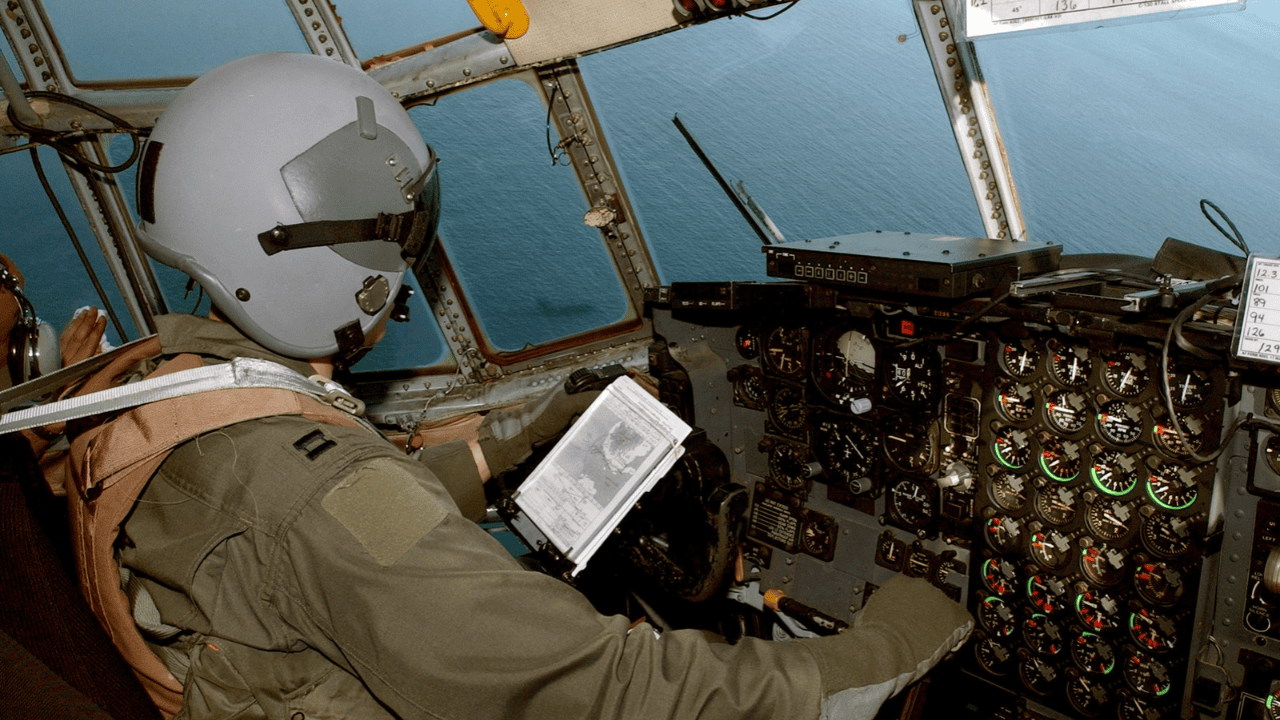
Photo of C-130 Hercules cockpit from Wikimedia commons
Having spent several years serving as a Navy Chaplain, I occasionally would be stationed with a Marine unit. In Okinawa, Japan, I was assigned to the First Marine Airwing. In the living quarters on the base, my room was next door to a Marine pilot who flew the C130 aircraft, a large cargo plane carrying equipment and passengers.
Each day in passing we would greet one another: “How you doing?” or “How’s your day?” The standard reply echoed: “All’s well, thanks.” One day, however, there was something unusual in the way he said his usual response. So, I threw some belongings in my room and quickly returned to him. “Are you really OK?” I asked.
He began to describe his experience that day. He was to transport 50 Marines, all their gear, and some heavy equipment to Korea for an extended training exercise. When his aircraft was headed down the runway, just as it was to lift off the ground, he lost an engine. “Do I take off and try to clear the trees ahead?” he said, “Or do I hit the brakes and hope to stop before going through the boundary fence?”
I could hear the alarm in his voice. And, at that point my own heart was pounding. I asked, “What did you do? Is everyone ok?”
“I cut the throttle, hit the brakes and stopped in the grass, just short of the fence,” he replied. “You must have been terrified,” I said.
“Not at all” he replied, “I just did what constant training had instilled: ‘If this happens, do this; if that happens, do that.’ Challenges are repeatedly practiced and drilled, and responses are committed memory. When the plane stopped, I shut down all systems and walked through the aircraft to ensure everything was secure. However, as I exited the airplane and stepped out onto the ground to see those 50 Marines sitting on the grass, patiently waiting for me, that’s when I fell to my knees. Until that moment of awareness, I was simply on autopilot mode; the training — the discipline — had paid off.”
Discipline and disciple come from the same Latin root. And it is the discipline in prayer (personal and common) that helps us become faithful disciples. Fr. Thomas Merton put it this way: “Holiness is the habitual awareness of God’s abiding presence.” Repeatedly practiced, we are to be in the habit of prayerfully maintaining a relationship with our Lord. Divine Providence is instilled in our trust, confidence and hope. This ongoing discipline shapes our ability to navigate life’s challenges and opportunities. We may occasionally find ourselves in autopilot mode along the way, and fall to our knees in gratitude and awe, aware of how the Lord has worked with us – and through us. The discipline pays off.
By Fr. Bill Dorwart, C.S.C.
Published November 25, 2026 by the Office of Vocations