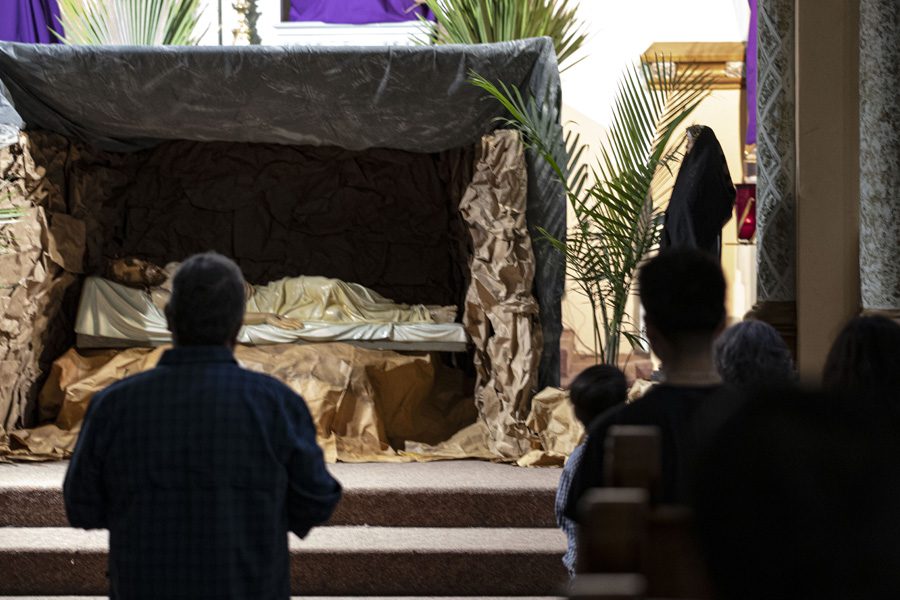
Pictures by the Congregation of Holy Cross, United States Province of Priests and Brothers.
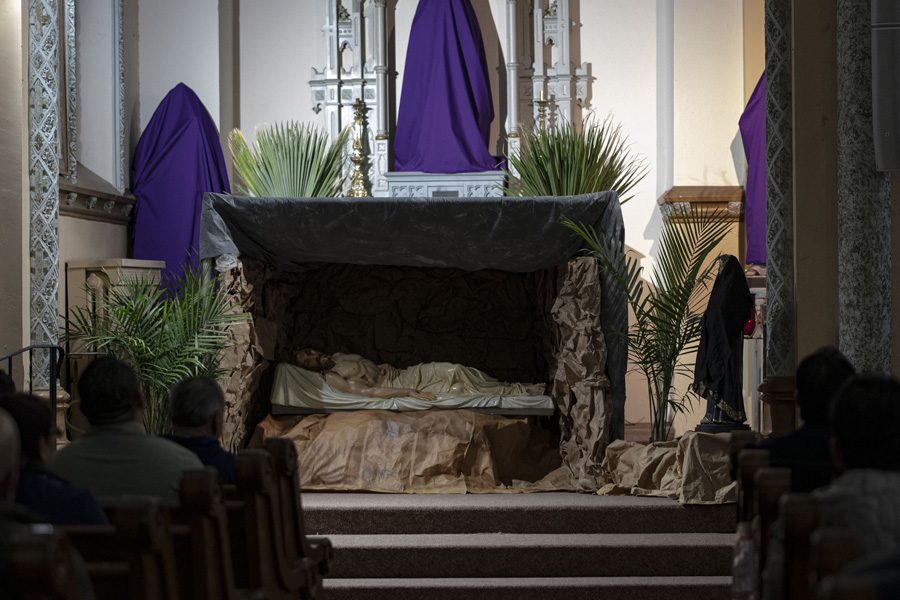
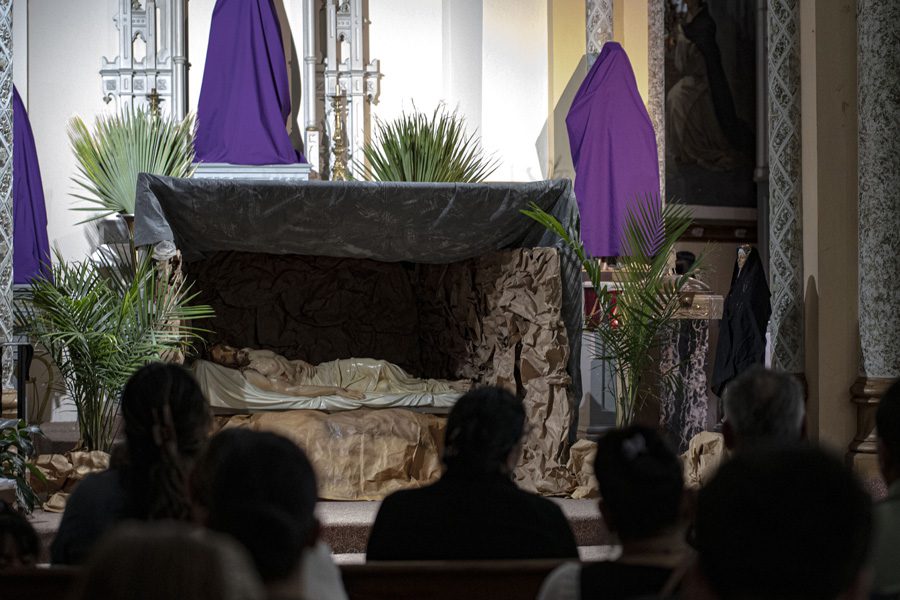
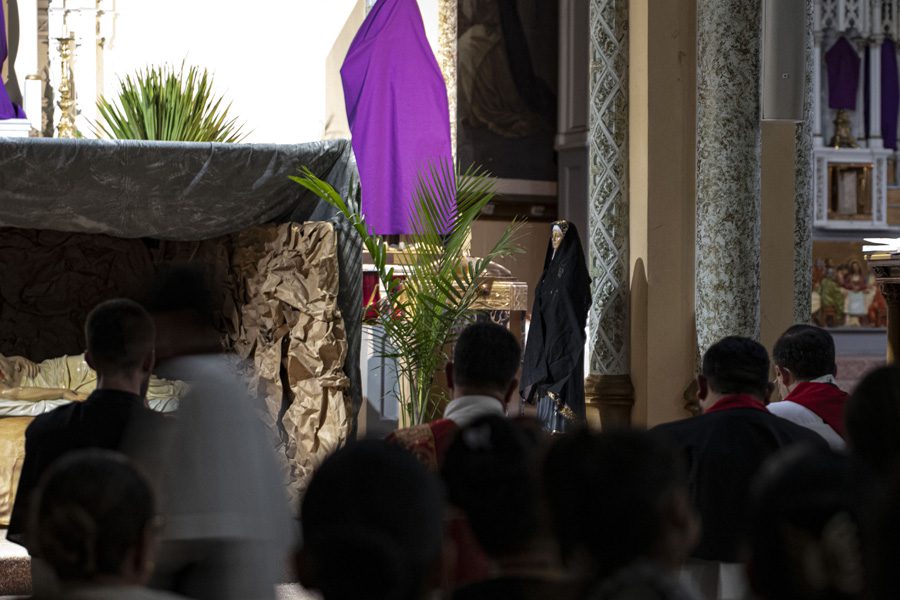
On Good Friday, the Catholic Church commemorates the suffering, crucifixion, and death of Jesus. It is a time of fasting, mourning, and reflection on Jesus’ sacrifice. Parishes worldwide participate in the reading of the Passion, the Stations of the Cross, and the Veneration of the Cross. At St. Adalbert Church in South Bend, Indiana, a Congregation of Holy Cross, United States Province sponsored parish, the Hispanic community gathered for an evening Good Friday service that included a Veneration of the Cross and Condolence of the Virgin.
“I don’t actually know the exact origin of this tradition, but it does go back quite far in Hispanic spirituality. It is significant because there is a deep devotion to the Blessed Mother in Hispanic Catholic culture, and many people relate closely to her suffering,” shared Rev. Ryan J. Pietrocarlo, pastor of St. Adalbert/St. Casimir Parish in South Bend, Indiana. “On Good Friday, she loses her Son, and the Hispanic community sees their own pain reflected in hers. They believe that Mary accompanies them in their suffering. They also express their condolences to her because of the great love and devotion they have for her.”
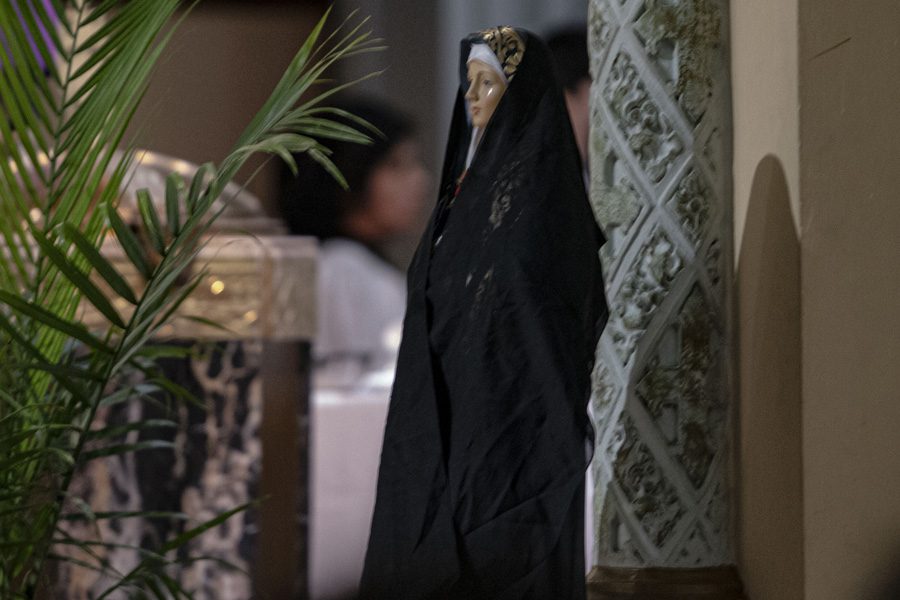
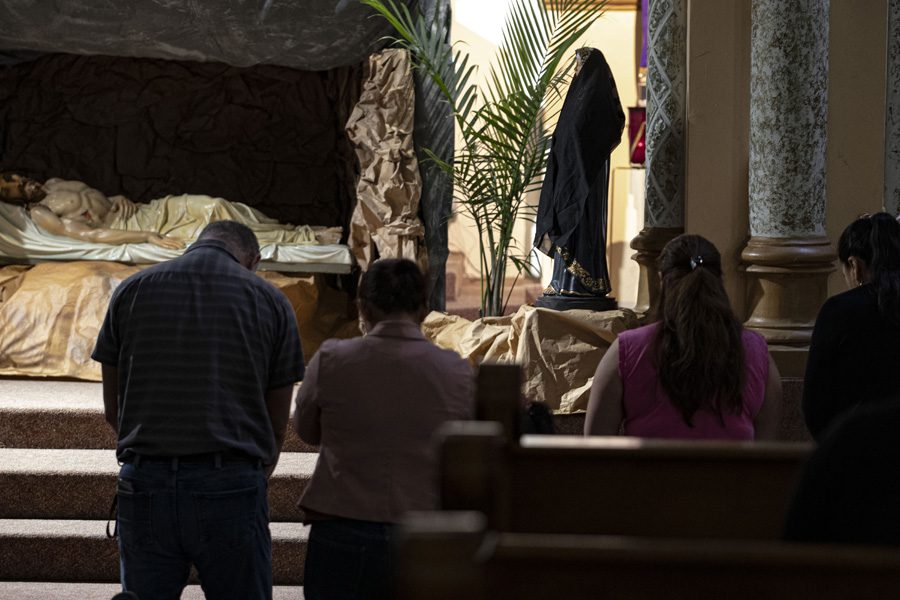
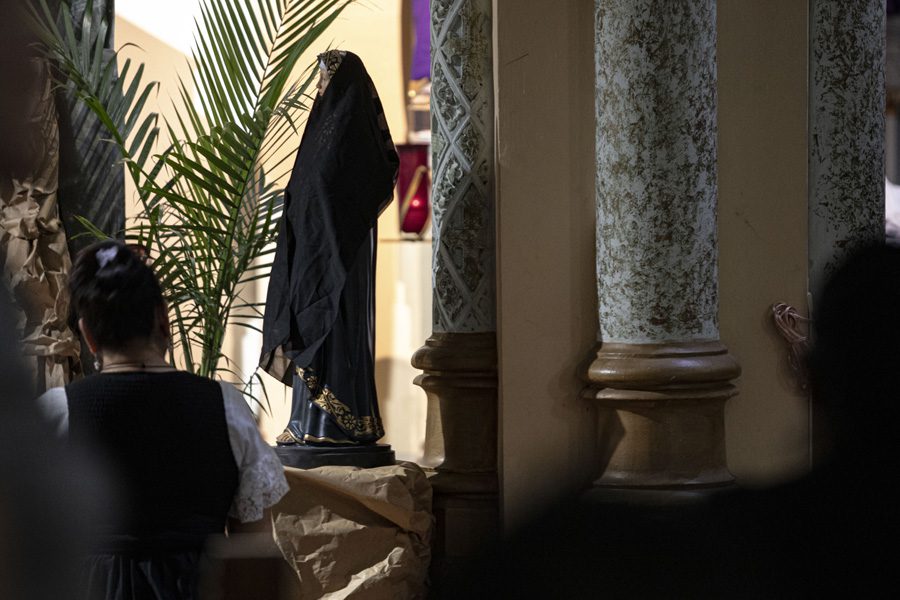
While in angst at the torture and pain her son was enduring, the Virgin Mary never questioned the will of God and the role of Jesus as Savior of the world. The special moment during the Condolence of the Virgin invited people of all ages to pray and weep before a mother who had great strength and love for her son. After parishioners had a moment of Veneration at the Cross, they were welcomed to the side of the altar where a statue of Jesus on a stone was affixed next to a statue of Our Lady of Sorrows, draped in a black veil. Soft music played in the background, and people of all ages spent a moment kneeling, offering prayers of condolence, many weeping in empathy for the sadness felt by the Virgin Mary at the time of her son’s death. It was a moment of profound love, devotion, and prayer.
“I hope that visitors see not only the love and devotion to the Blessed Mother, but also recognize that she suffered, just as we do. Mary is with us in our suffering and understands our pain. We should turn to her when we suffer, seeking her intercession, her consolation, and a renewed sense of hope,” said Fr. Ryan. “Mary knew that the Cross was not the end — that life would ultimately triumph in the end.”
Provided by the United States Province Communications Office, April 2026.