Photos provided by the Holy Cross Mission Center.
“The Church which ‘goes forth’ is a community of missionary disciples who take the first step, who are involved and supportive, who bear fruit and rejoice. An evangelizing community knows that the Lord has taken the initiative, he has loved us first (cf. 1 Jn 4:19), and therefore we can move forward, boldly take the initiative, go out to others, seek those who have fallen away, stand at the crossroads and welcome the outcast. Such a community has an endless desire to show mercy, the fruit of its own experience of the power of the Father’s infinite mercy. Let us try a little harder to take the first step and to become involved. Jesus washed the feet of his disciples. The Lord gets involved and he involves his own, as he kneels to wash their feet. He tells his disciples: ‘You will be blessed if you do this’ (Jn 13:17). An evangelizing community gets involved by word and deed in people’s daily lives; it bridges distances, it is willing to abase itself if necessary, and it embraces human life, touching the suffering flesh of Christ in others.”
– Evangelii Gaudium, paragraph 24.
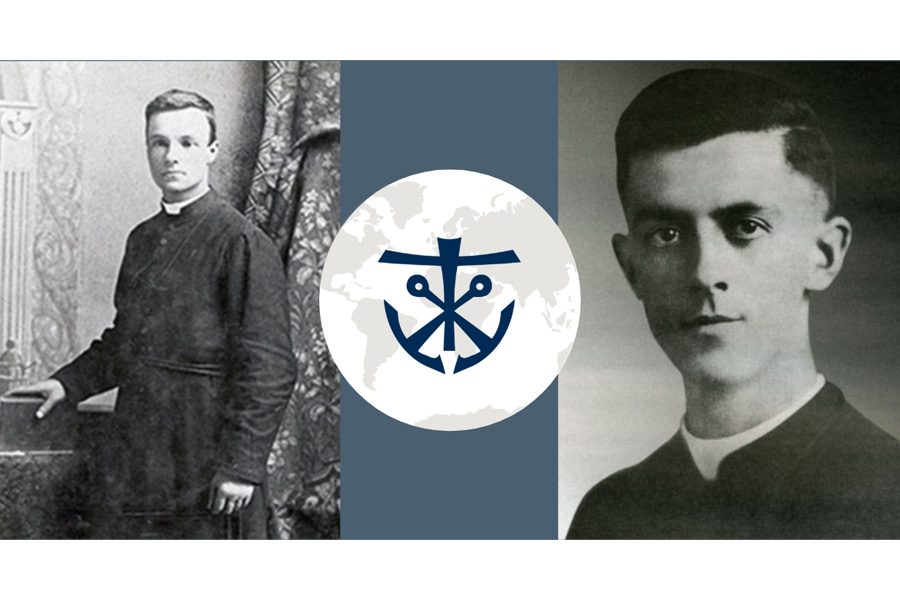
In 1932, shortly after his 25th birthday, Br. Flavian Laplante, C.S.C., was sent from Canada to the Congregation of Holy Cross’s new mission in East Bengal (now present-day Bangladesh and northeast India). Watching Br. Flavian depart from Notre Dame College in Montreal was the college’s elderly doorkeeper, 87-year-old Br. André Bessette, C.S.C., who said to Br. Flavian, “How fortunate you are in becoming a missionary. I envy you.”
Yet when one considers the missional impact of both these Canadian men of Holy Cross, Br. André’s envy seems ironically misplaced. Their lives collectively reveal that the “going forth” Pope Francis describes is not principally about geography, but rather about availability to God’s initiative. They demonstrate what it means to live out the call to missionary discipleship within one’s own concrete particularities.
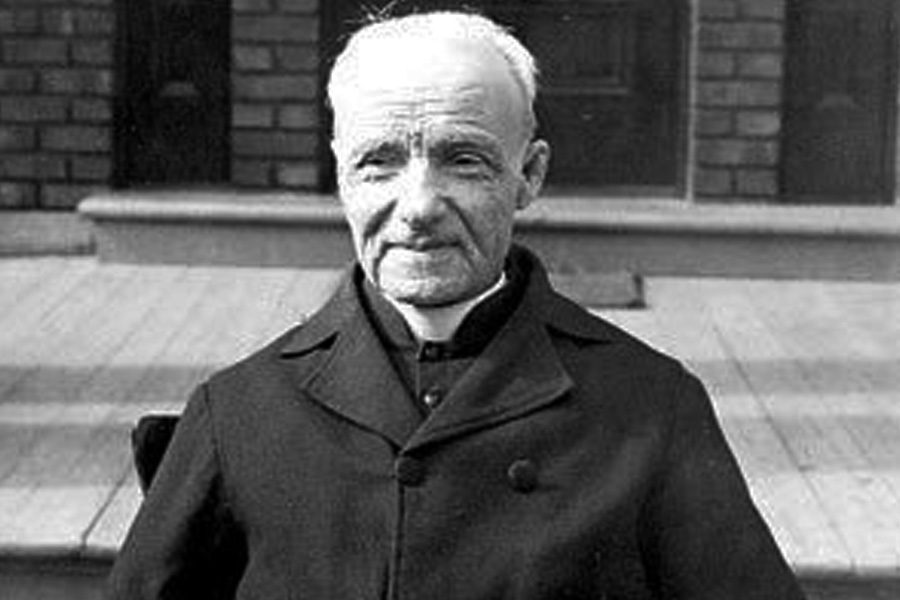
Born Alfred Bessette on August 9, 1845, in Quebec, Canada, Br. André’s early life showed little promise by earthly standards. Orphaned by the age of 12, he began working to support himself and received minimal formal education. After working as a farmhand, he tried his hand at various trades, such as shoemaking, baking, and being a blacksmith, but never succeeded at any of them. When he was 25, he attempted to join the Congregation of Holy Cross but was rejected on the basis of his frail health.
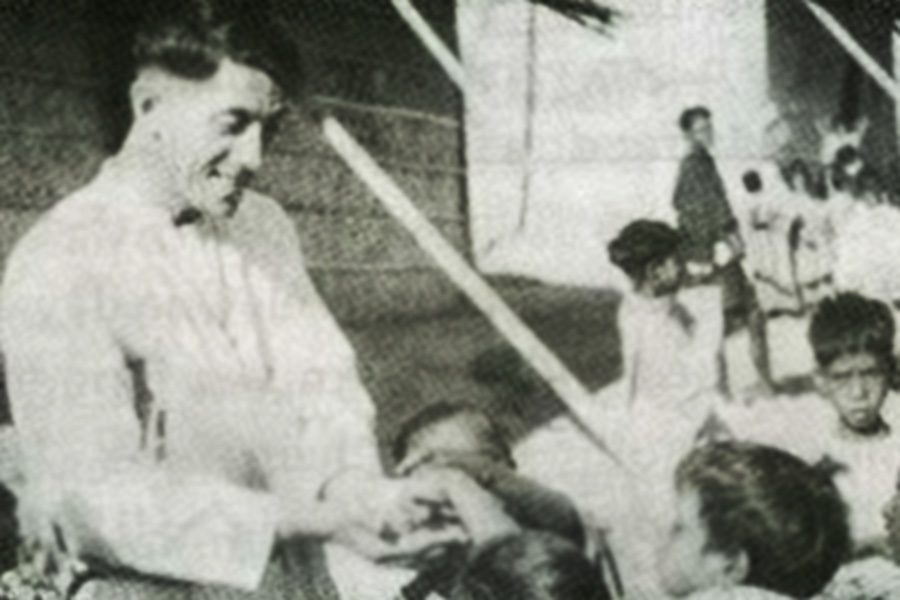
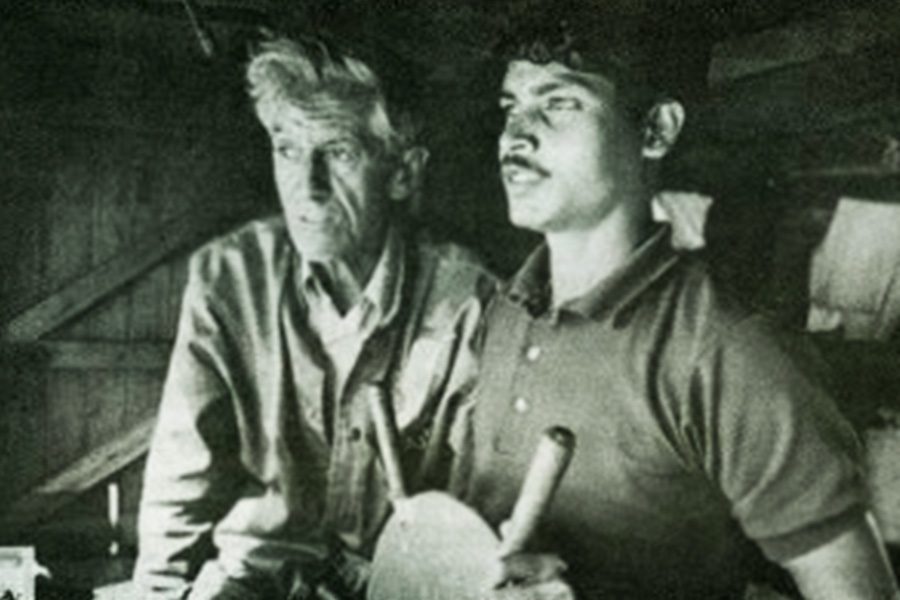
In stark contrast, when he was 25 years old, Br. Flavian’s (born Doria Laplante in 1907) virility and education positioned him to serve in many capacities within the Congregation’s foreign missions in East Bengal. His initial tasks included manual labor and construction, as well as teaching at the Congregation’s high school and supervising a dorm, before becoming the school’s principal. After Japanese air raids damaged Chittagong, he went forth to help, and remained there for the following two years in order to support the hungry and sick during a severe famine. He soon found his particular calling: working with fishermen. Br. Flavian often accompanied the fishermen, becoming involved in their daily lives, sometimes spending weeks at a time at sea with them. He didn’t shy away from going on rescue missions and fighting against pirates. He also found a way for them to receive new boats after theirs were commandeered for the war, and later established an initiative and a school so that the fishermen could learn to build, motorize, and mend their own boats. His health, education, and innovative leadership supported his efforts to improve the lives of the people he was ministering to.
But one would be grossly remiss not to attribute Br. Flavian’s impact ultimately to God, and to his personal spirituality. Br. Flavian was known for spending his nights in prayer before the tabernacle, and for having a deeply rich spiritual life. Such spirituality fed his devoted love for the marginalized and outcast. In addition to his work with fishermen, Br. Flavian also established an orphanage and is remembered for welcoming the outcast by working with Hindus, who were at the time considered at the lowest rung of society.
His life exemplified Pope Francis’ call to “move forward, boldly take the initiative, go out to others, seek those who have fallen away, stand at the crossroads and welcome the outcast,” with “an endless desire to show mercy, the fruit of [one’s] own experience of the power of the Father’s infinite mercy,” getting involved in people’s daily lives, and “bridging distances” (EG, 24).
—
“In virtue of their baptism, all the members of the People of God have become missionary disciples (cf. Mt 28:19). All the baptized, whatever their position in the Church or their level of instruction in the faith, are agents of evangelization, and it would be insufficient to envisage a plan of evangelization to be carried out by professionals while the rest of the faithful would simply be passive recipients. The new evangelization calls for personal involvement on the part of each of the baptized. Every Christian is challenged, here and now, to be actively engaged in evangelization; indeed, anyone who has truly experienced God’s saving love does not need much time or lengthy training to go out and proclaim that love. Every Christian is a missionary to the extent that he or she has encountered the love of God in Christ Jesus: we no longer say that we are ‘disciples’ and ‘missionaries’, but rather that we are always ‘missionary disciples’.”
– Evangelii Gaudium, paragraph 120.
Though he never left Canada, and lacked the education and many of the gifts and skills of Br. Flavian, Br. André nonetheless lived out the calling of missionary discipleship as well. His life embodied the truth that “Being a disciple means being constantly ready to bring the love of Jesus to others, and this can happen unexpectedly and in any place: on the street, in a city square, during work, on a journey…” (EG, 127).
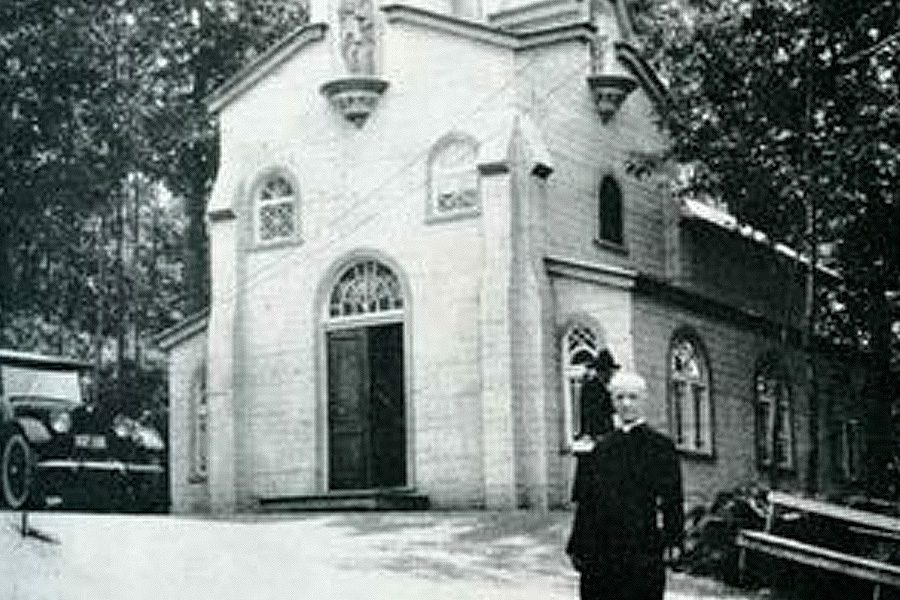
After his initial rejection from the Congregation, Br. André was later admitted that same year, thanks to the influence of the Archbishop of Montreal. Deemed deficient in health and education for most tasks, he was assigned to the humble role of doorkeeper at Notre Dame College in Montreal. He later famously joked, “When I joined this community, the superiors showed me the door, and I remained 40 years.”
Br. André had a small room near the door, and was known to spend many hours in prayer there nightly.
His compassion often took him away from his door post, as he traveled to visit the sick and anointed them with oil from the college’s chapel, “touching the suffering flesh of Christ in others.” He also volunteered to provide nursing assistance when a nearby college campus was stricken during an epidemic. But his ministry really began not by seeking extraordinary opportunities, but by taking the first step with each person who arrived at his door.
As a doorman, Br. André’s hospitality extended to being a listening ear as people shared their personal problems. In doing so, he practiced the “art of listening” which Pope Francis would later deem essential to missionary discipleship. “Listening, in communication,” Pope Francis would say, “is an openness of heart which makes possible that closeness without which genuine spiritual encounter cannot occur” (EG, 171).
And genuine spiritual encounters did occur. After taking the first step to get involved (EG, 24) by attentively and compassionately listening, Br. André encouraged visitors to trust God and then offered to pray with them, inviting the Lord’s love into their sufferings. Significantly, many people experienced physical healing after praying with Br. André.
Eventually, word of his healing charism spread and droves of people began to come to him to receive prayer. The number of visitors coming specifically for Br. André grew so much that, with the Congregation’s permission, he started receiving people at a trolley station across the street.
This humble doorman, faithful to prayer, was given a ministry right where he was, through being attentive to the needs of others and offering to carry their needs with them to the Lord in faith. He didn’t need to travel the world to find people to accompany to God. Instead, they came to him. He found his full-time ministry in praying for the sick who showed up at his doorstep. Thousands of miraculous healings have been attributed to the work of God through Br. André’s prayers, and he became known as the “Miracle Man of Montreal.”
In the end, Br. André had no reason to envy Br. Flavian, for he had also found a way to bring the love of Christ to others while remaining rooted where God had called him to be.
Missionary discipleship is not defined by where we serve, but rather by how we respond to God’s call within our own circumstances. Though their ministries looked different, each allowed God’s initiative to become the source of his own. That is the heart of missionary discipleship.
The Holy Cross Mission Center invites you to prayerfully consider: How am I called to be a missionary disciple in my concrete particularities?
Provided by Paula Lent, Holy Cross Mission Center Office Coordinator, with help from Franciscan Media and FaithND, October 2026.