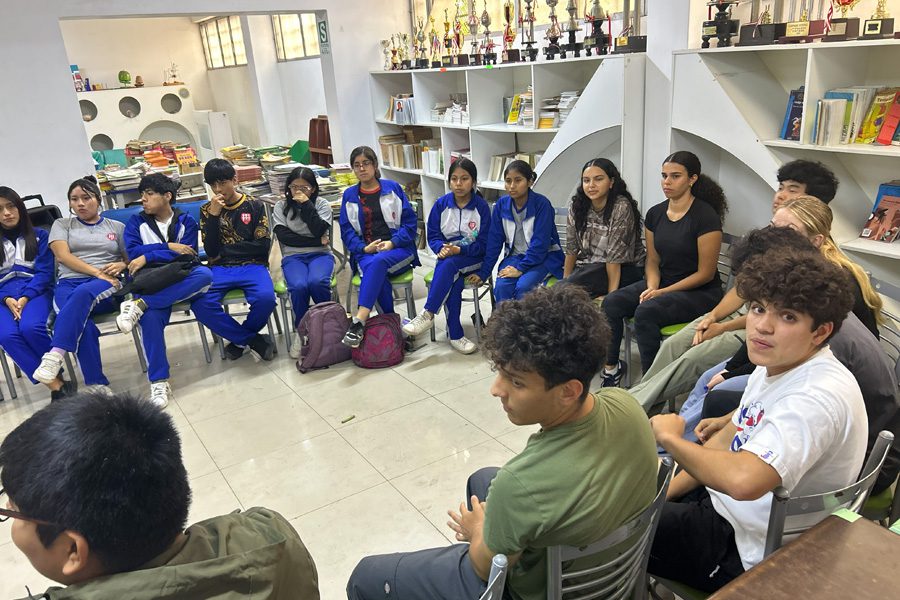
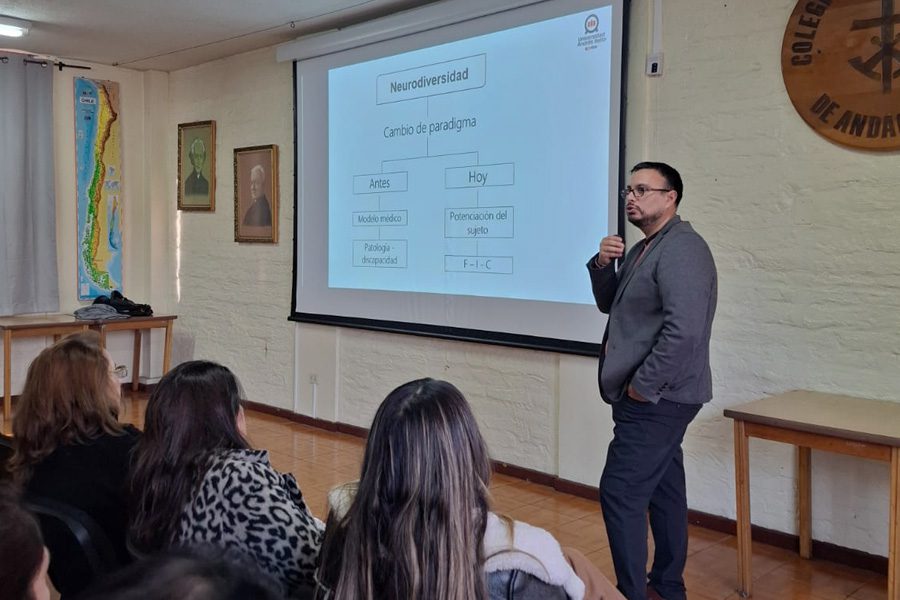
Photos provided by the Holy Cross Mission Center.
In 2023, Colegio Nuestra Señora de Andacollo (Our Lady of Andacollo College), one of three Holy Cross schools in the District of Chile-Peru, reached out to the Holy Cross Mission Center (HCMC) with a request for funding in order to better support and integrate neurodivergent students within their school community.
“The effects on mental health following the pandemic have increased. Educational spaces have had to deal with these deteriorating effects on the mental health of children and young people,” Rev. Romulo Vera Muñoz, C.S.C., the school’s chaplain and C.S.C. representative, told the HCMC.
“The diagnoses of cognitive and socioemotional disorders have increased in our school. Currently we have 18% of the school population with some type of cognitive difficulty (Down syndrome, autism, Asperger’s) and socioemotional difficulties (suicidal ideation, suicide attempts, anxiety and panic crises, juvenile depression),” he continued. “Access to interventions or medical support that parents must pay for often exceeds the family budget, which makes accompaniment even more difficult.”
In order to respond to this pressing need, the school sought funds that would enable them to provide special training for teachers, equipping them to better support neurodivergent students. Additionally, funds received would be used to acquire therapeutic tools for students, and, importantly, to create a new space for neurodivergent students to find refuge–a space in which to temporarily withdraw from situations causing sensory overstimulation, emotional discomfort or anxiety. “Its main purpose is to provide a predictable and safe setting in which children can regain their emotional balance through carefully selected and controlled stimuli,” Fr. Muñoz explained.
St. Paul told the Corinthians, “If one part suffers, every part suffers with it; if one part is honored, every part rejoices with it” (1 Cor. 12:26), and Our Lady of Andacollo College envisioned this project as one that would bless not only neurodivergent students but the entire school community. “What we seek more than to serve a minority is to generate the universal promotion of the emotional wellbeing of the community,” Fr. Muñoz articulated.
“A project that generates spaces for neurodivergent care has great potential to be integrated into the apostolic work of Santa Cruz,” Fr. Muñoz stated further. “The key is to build an inclusive approach that respects and values human diversity, allowing everyone, regardless of their condition, to feel loved and accompanied in their spiritual journey. Through awareness-raising, formation, and the creation of adapted and accessible spaces, such a project can transform the school community into a true reflection of Christ’s mercy and love.”
Thanks to a grant from the Mary Jane Delaney Endowment Fund (MJDEF), the HCMC was pleased to financially support this important work of the school, and the effects have been beautiful.
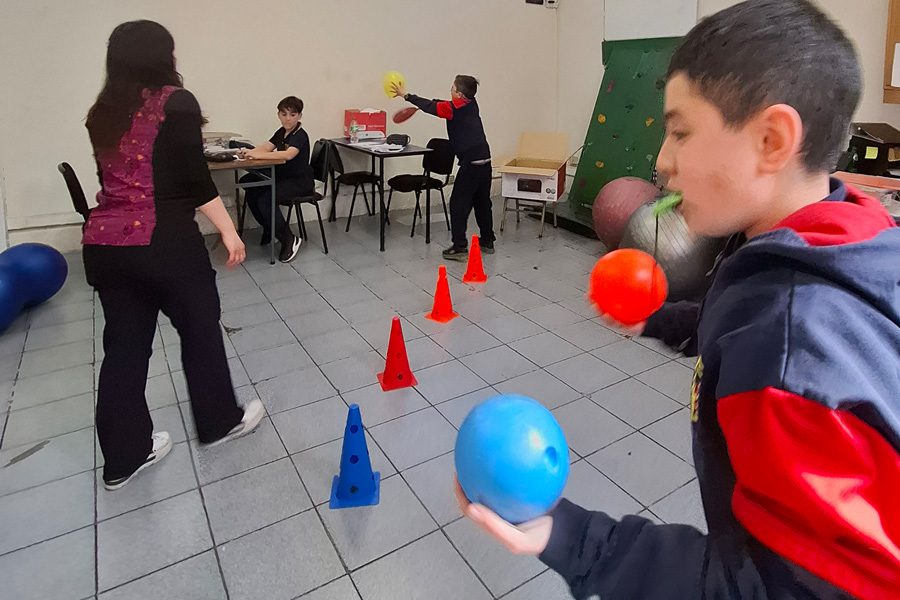
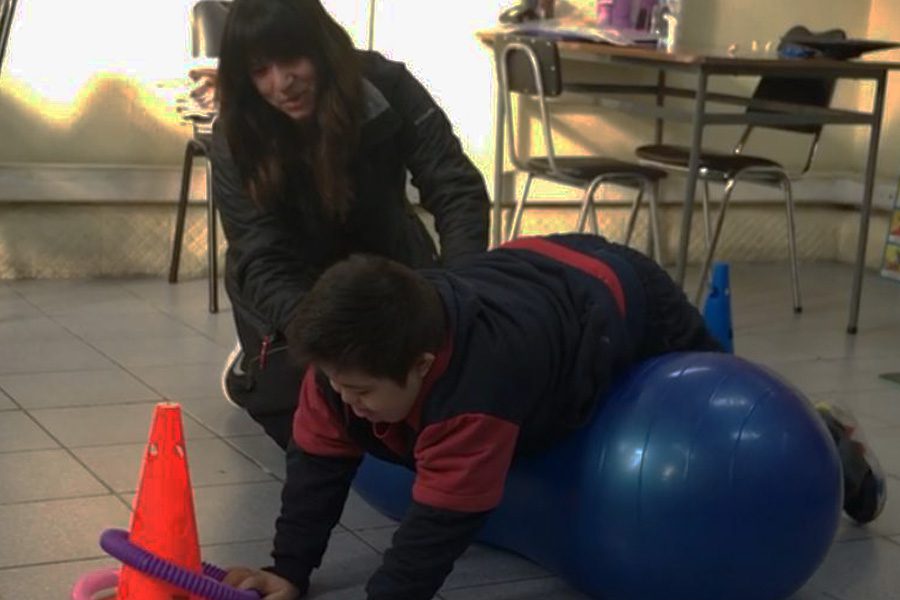
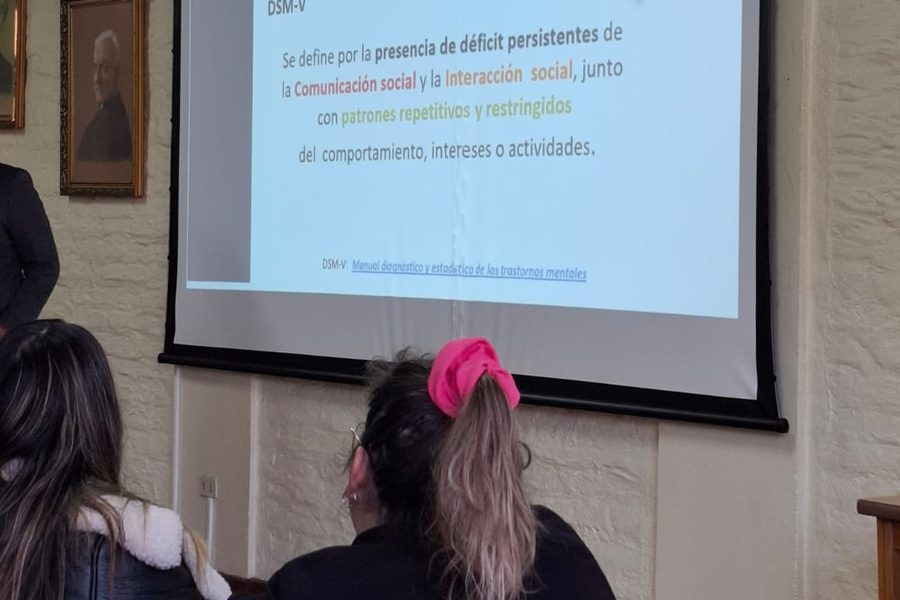
As a result of the funding, Our Lady of Andacollo College was able to train more than 90 school employees with tools and strategies for supporting neurodivergent students, and to create a new space equipped with specific materials that promote relaxation, reduce stress, enhance concentration, and provide therapeutic sensory objects and tools for managing intense auditory stimuli.
Available to the entire student body of nearly 200 students, the new space has had a significant impact. School director Ana María Pichicona described the difference the space has made so far, saying, “This type of space not only helped manage occasional episodes of emotional or sensory overload but also gradually strengthened the children’s ability to self-regulate, which has a positive impact on their overall performance within the educational context and on their social interactions.” Pichicona emphasized that the space is calming and students are able to use the sensory materials with an occupational therapist whom the school hired to support its students.
Mariana Millapan, the school’s psychologist, works with a significant number of neurodivergent students. She told the HCMC that “the number of students with autism across all its spectrums has increased by approximately two to three per classroom entering the school” since 2018.
“Students with [neurodivergent] characteristics require us to provide ongoing training in this area, and this project has allowed us to train all staff members in strategies for working with these students,” Millapan continued. “I am very grateful to the school for allowing staff members to learn about and be part of the care and support for all our students, especially those with disabilities.”
“Many of the families who enroll in our school with students with autism come because other schools have not accepted them due to their condition. This challenges us to continue working to prepare ourselves to care for our children and improve their quality of life, attending to those with the greatest need, as Saint Paul would say… the poorest of the poor,” she reflected.
Fr. Muñoz has been assigned to Our Lady of Andacollo College since 2013. After the completion of this project, he shared with the HCMC, “I’ve been familiar with working with autistic students since I started in school. It hasn’t been easy due to the fear of the unknown surrounding this type of condition. However, I see how students, despite their differences, manage to adapt to the school environment and not feel excluded. A special situation is that these students are also invited to form themselves in the faith and prepare to receive their Sacraments of Baptism, First Communion and Confirmation.”
Blessed Basil Moreau is credited with describing education as a “work of resurrection,” and at Our Lady of Andacollo College, the education and resources provided by the MJDEF funding through the HCMC have indeed brought new life into the school community.
Provided by the Mission Center, March 2026.